RPA Assistants
About RPA Assistants in Manage
The RPA Assistants section in the RPA Management lists all software Assistant components. These are lightweight desktop applications that help you to interact with attended robots. Assistants allow users to start, monitor, and manage the bot workflows from their local machines.
This section enables administrators to:
-
Monitor all configured Assistants and their connection statuses.
-
View the connection history of each assistant.
-
Temporarily deactivate an assistant when required.
Assistant page lists only Assistant type components.
Viewing RPA Assistant Details
The Assistants section in the RPA Management lists all the assistants.
- Navigate to Main Menu > Manage > RPA Management > Monitoring > RPA Assistants tab. The grid displays the assistant information.
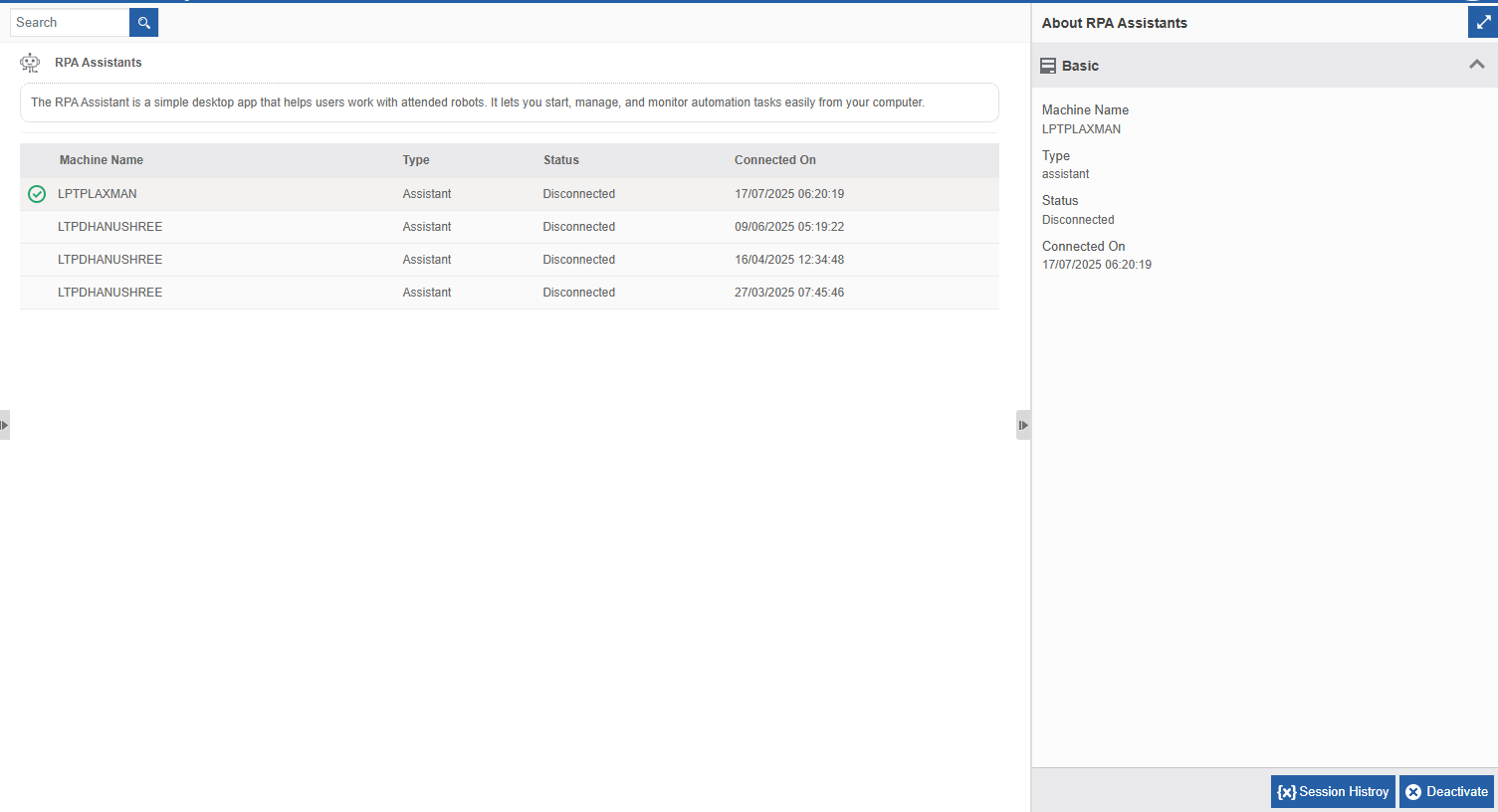
RPA Assistants and details
-
Click an item in the assistant list and the details also appears on the About RPA Assistant on the right-side panel.
-
Machine Name: Name of the client machine in which the automation runs.
-
Type: Type of the client in which automation runs. In this case it is Assistant.
-
Status: Current status of the connection.
-
Connected: Machine is connected to the RPA application (Studio, Agent, or Assistant).
-
Disconnected: Machine is disconnected from the RPA application (Studio, Agent, or Assistant).
-
Busy: Machine is busy in executing the automation workflow in Agent.
-
Available: Machine is available for execution of workflow in Agent.
-
Connected On: The date and time on which the machine was associated with the client application.
Searching for RPA Assistants
The search feature makes it easier to fetch specific workflows quickly.
-
Navigate to Main Menu > Manage > RPA Management > Monitoring > RPA Assistants tab.
-
Click the “Search” textbox at the top-left and enter the bot machine name. As you type the name, the filtered result dynamically appears on the grid.
Viewing Assistant Session History
- Navigate to Main Menu > Manage > RPA Management > Monitoring > RPA Assistants tab.
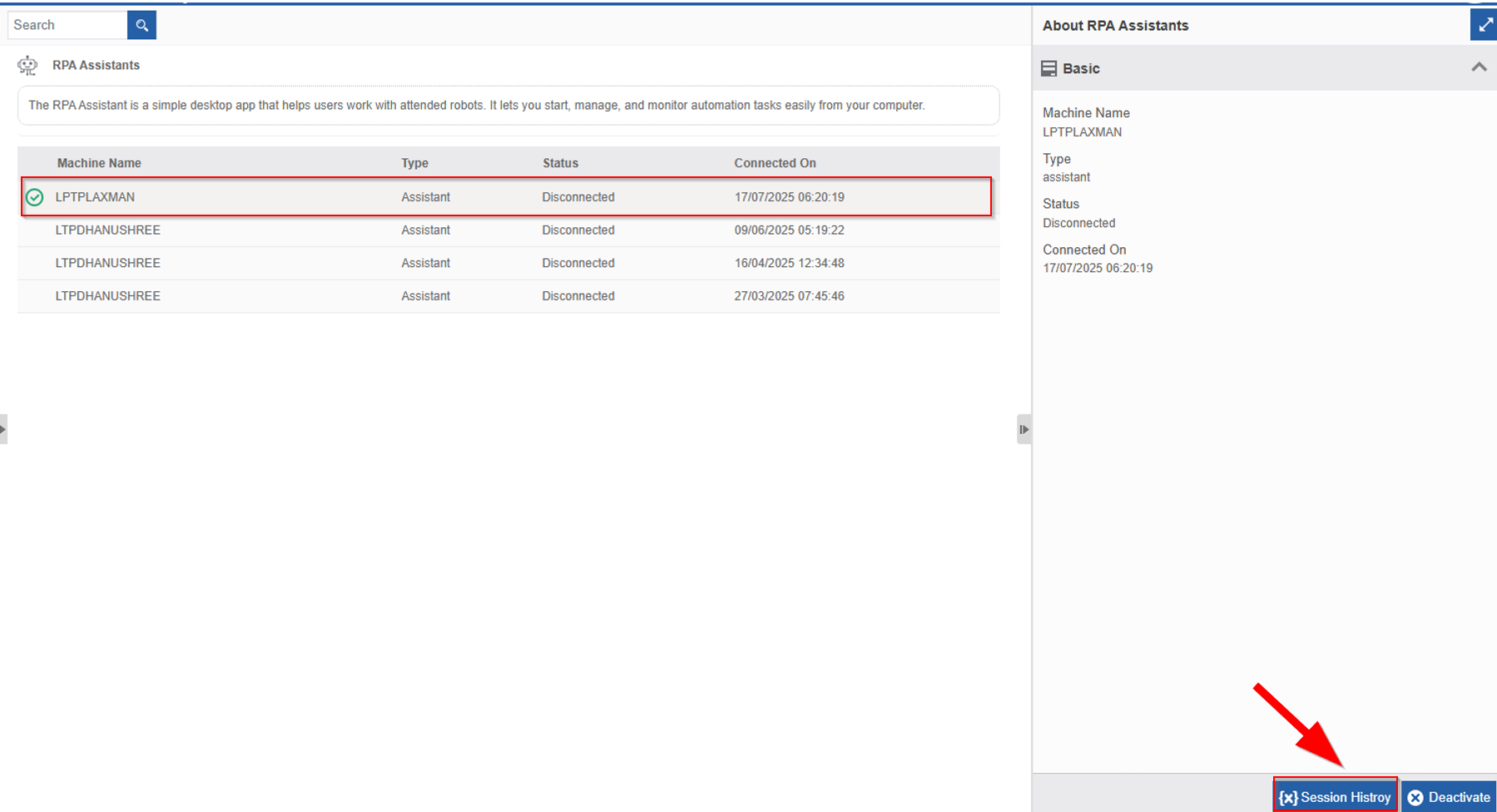
- Click {x} Session History.
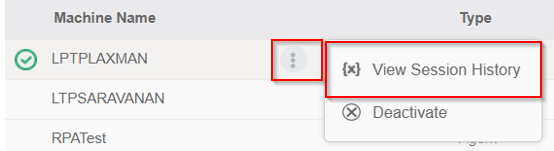
Alternatively, hover over a machine name and click the three dots > Session History.
Session History details appear.
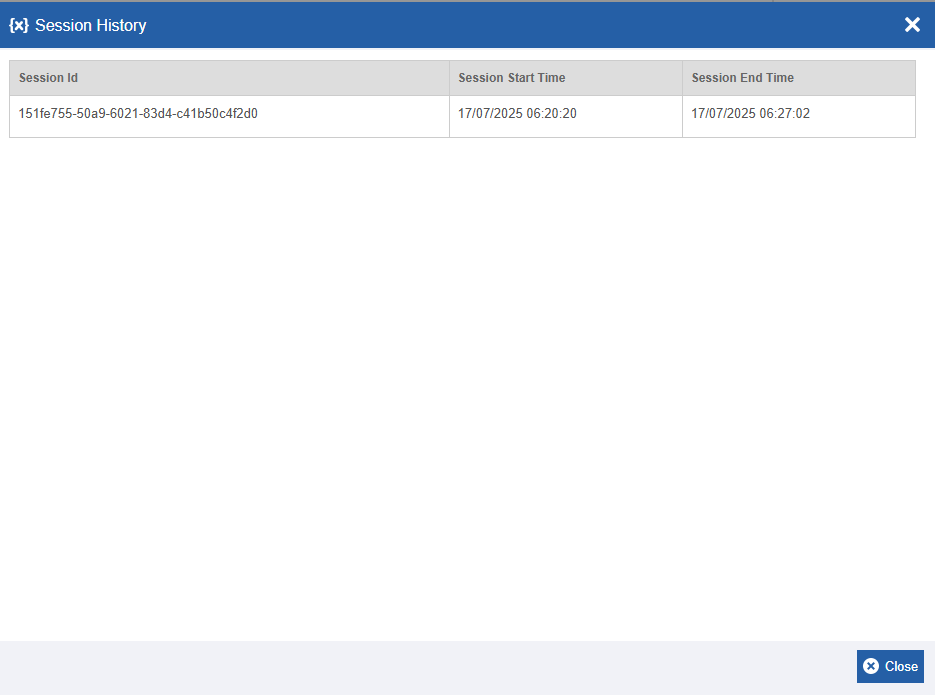
Session History
-
Session Id: Reference Id of the session.
-
Session Start Time: Starting date and time of the session. That is, the date and time on which the session connection is established.
-
Session End Time: The date and time on which the session got disconnected or ended. If the session is connected, the end time will not be displayed as the session has not ended yet.
-
Click Close to close the session pop-up.
Deactivating Assistant Connection
Deactivation temporarily deactivates an assistant’s connection from the machine stopping the execution of the workflow. Assistant’s machine status becomes “Disconnected”.
- Navigate to Main Menu > Manage > RPA Management > Monitoring > RPA Assistants tab.
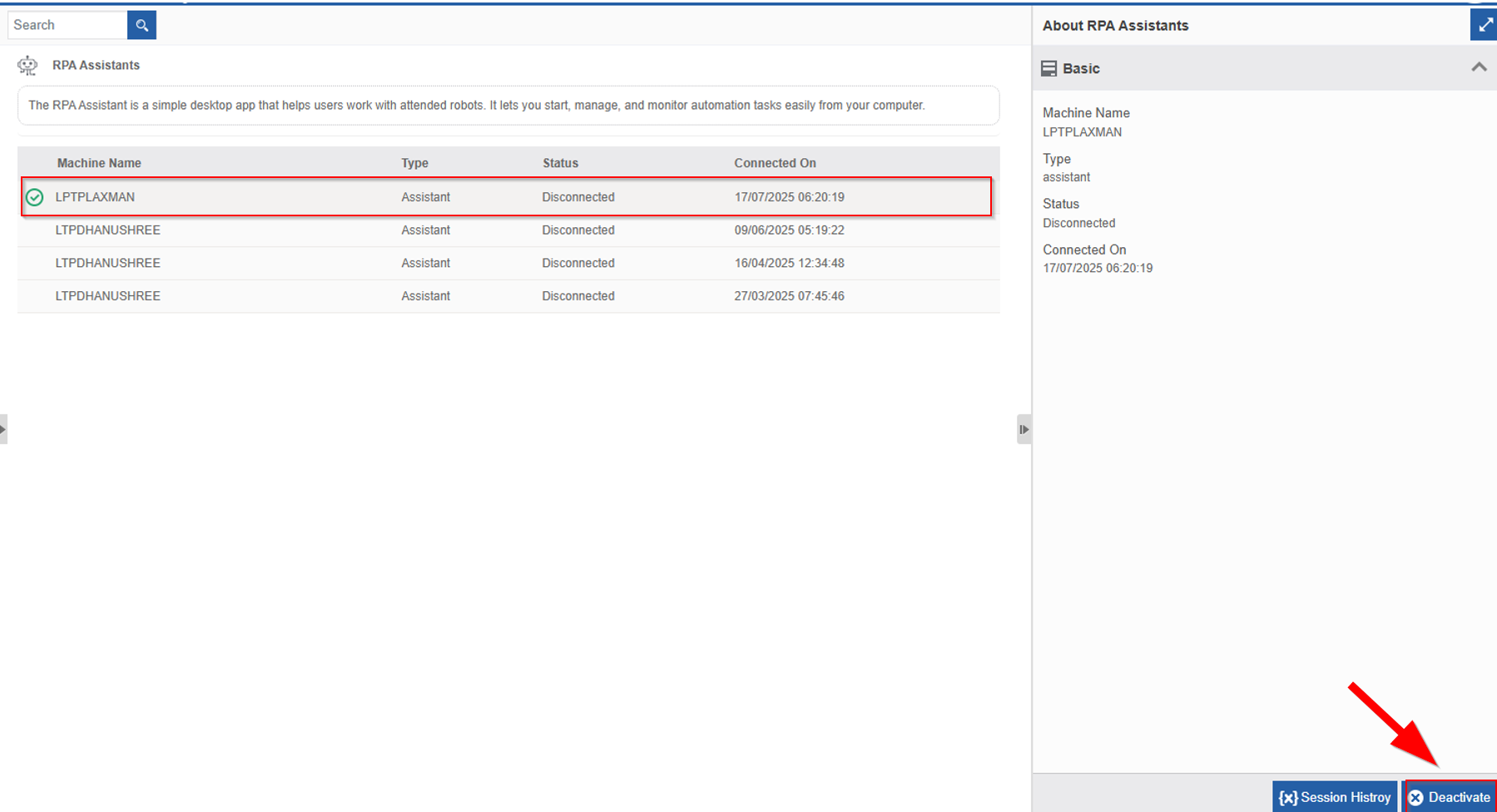
Deactivating an assistant
-
Click Deactivate.
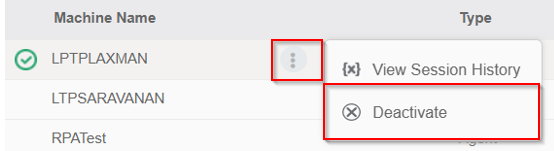
Alternatively, hover over a machine name and click the three dots > Deactivate,
Confirmation message appears.
Click Ok to deactivate or Cancel to discard the action. Success message appears on successful deactivation. -
Click Ok.
The selected assistant’s connection with the machine becomes deactivated.
Activating Assistant Connection
Reactivation re-establishes the Assistant’s connection with the machine. Assistant’s machine status becomes “Connected”.
-
Navigate to Main Menu > Manage > RPA Management > Monitoring > RPA Assistants tab.
-
Click and select a machine name from the table. When you select a deactivated machine, “Activate” button appears on the bottom right.
-
Click Activate.
Alternatively, hover over a machine name and click the three dots > Activate.
Confirmation message appears.
Click Ok to activate or Cancel to discard the action. Success message appears on successful activation. -
Click Ok.
The selected assistant’s connection with the machine becomes active.